GLP Weight Loss Research · Sourcing
A 5mg Vial And 5mg Of Compound Are Not The Same Claim. Almost Nobody Checks The Second One.
Purity and quantity are two different tests. A vial can pass one and say nothing about the other. Most listings in GLP weight loss research only print the first. Here is how to find out what you actually paid for.
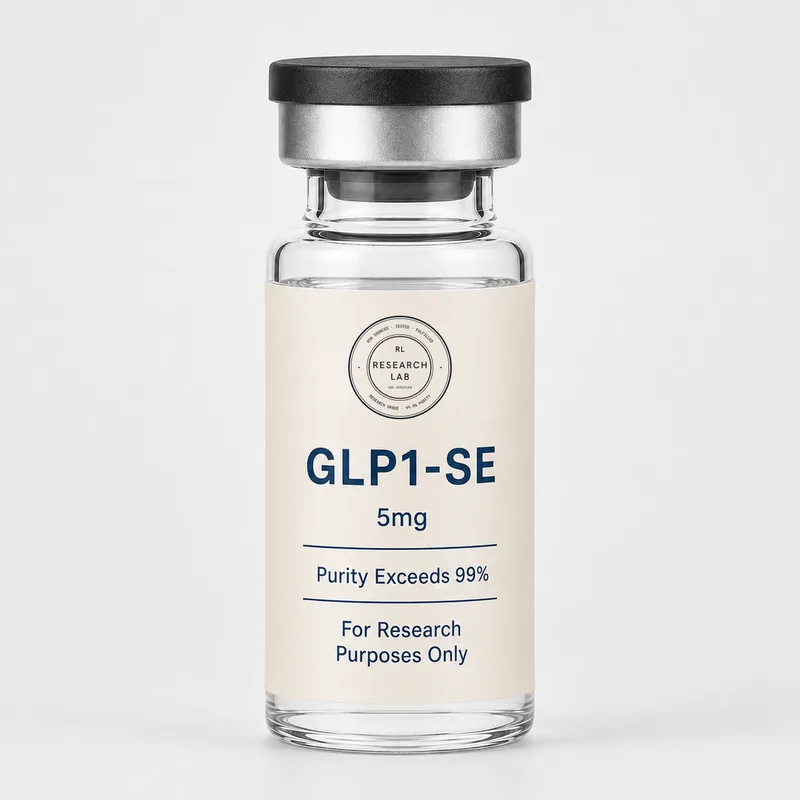 View the listing and its certificate →
You buy a 5mg vial. The listing says the purity exceeds 99%. So you assume the vial holds 5 milligrams of compound, and that compound is 99% the right molecule.
That is not what those two numbers mean together.
Purity is a ratio. It answers one question: of the compound that is in here, how much of it is the right molecule? It is a percentage of what is present. It is not a measurement of how much is present.
Net content is an amount. It answers the other question: how many milligrams of actual compound are in this vial?
A vial can be 99% pure and still hold noticeably less than the number on the label. Both things can be true at the same time. Only one of them usually gets printed, and in GLP weight loss research the price per milligram is high enough that the gap is real money.
Every GLP1 Research Lab compound carries a purity figure on the listing itself.
99.56% on GLP1 - SE. 99.79% on GLP2 - TZ. 99.09% on GLP3 - RT. Each with the batch certificate linked from the product page, before you order. Volume pricing applies at 3+ and 6+ vials.
Browse the catalog →1A percentage cannot tell you an amount
Think about a glass of orange juice. You can say the juice is 99% pure, meaning almost none of it is anything other than orange juice. That tells you nothing about whether the glass is full.
Compound vials work exactly the same way. Purity describes the contents. It does not measure them. Two vials with the same purity figure on the same shelf can hold different amounts, and nothing on the label will show you which is which.
Purity says what it is. Net content says how much. You want both numbers.
2The missing weight is not compound
Peptides come out of manufacturing with things attached. Usually residual salts from the process, plus water the powder pulls in from the air. Those are not contaminants exactly, and they do not lower a purity figure, because purity is only looking at the compound fraction.
But they take up weight in the vial. The label says 5mg. If a meaningful share of that weight is salt and water, what you paid for is the part that is left.
Weight in the vial and compound in the vial are not the same measurement.
3Why the second number is usually missing
Because it costs more to produce. Purity comes off a standard analytical run. Net content takes an additional quantitative method, and a laboratory has to be asked to run it and report it.
A supplier who never orders that test has nothing to hide and nothing to show. They simply do not know either. Neither do you. Their own walkthrough on how to read a Certificate of Analysis covers which fields to look at and in what order.
A missing number is not proof of anything. It is the absence of proof, which is the problem.
4On a blended vial it happens twice
Plenty of vials in this category hold two compounds. The label reads something like 5MG / 5MG. That is two separate amount claims on one line of text.
If a single vial with one compound rarely gets a content figure, a vial with two almost never gets two of them. The ratio printed on the label is the claim. The certificate is supposed to be the proof.
Two numbers on the label should mean two numbers on the certificate.
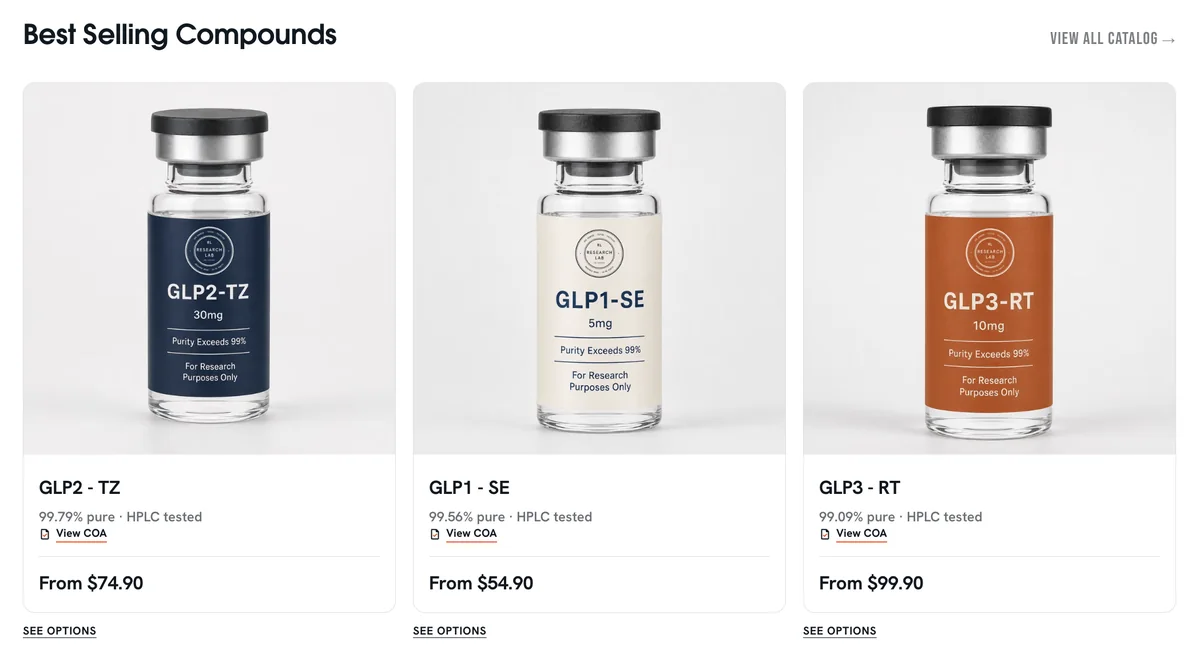 Open the full catalog →
Layout of a batch certificate. Open the real documents in the GLP1 Research Lab COA database and read the fields for yourself.
Read the certificate before you spend anything.
The COA database is public. Batch number, testing date, compound identity and purity percentage, on the document rather than in a claim.
Open the COA database →5How to check it in thirty seconds
Open the certificate for the product you are looking at. Do not read all of it. Look for four things.
- A line that says net content, or peptide content. If it is not there, the test was not run.
- A result next to it. Either a milligram figure or a statement that it meets the label claim.
- A batch number matching your vial. Otherwise you are reading about a different batch.
- A laboratory name and a date. Signed by the laboratory, not by the seller. Their FAQ sets out the purity standard every compound has to meet.
Four things. Under a minute. It is the fastest way to separate suppliers in this category, and it costs nothing.
| Before you order | GLP1 Research Lab | Typical supplier |
|---|---|---|
| Purity figure on the listing | Printed per product | Sometimes |
| Certificate linked from the listing | Every product page | On request |
| Batch number on the document | Batch specific | Often product level |
| Independent laboratory | Accredited, third party | Frequently in house |
| Published purity floor | 98% minimum, enforced | Rarely stated |
| Database you can search yourself | Public COA database | Email and wait |
6What actually arrives
Every item below is something you can check yourself. None of it asks you to take anyone's word.
- A vial carrying a batch number.
- A certificate tied to that batch, identified by batch number, testing date, compound identity and purity percentage.
- HPLC analysis from an accredited independent laboratory. No in house testing.
- Temperature controlled transit, shipped with gel packs via FedEx. The shipping policy states the method.
- A public database so you can open the same document again at any time.
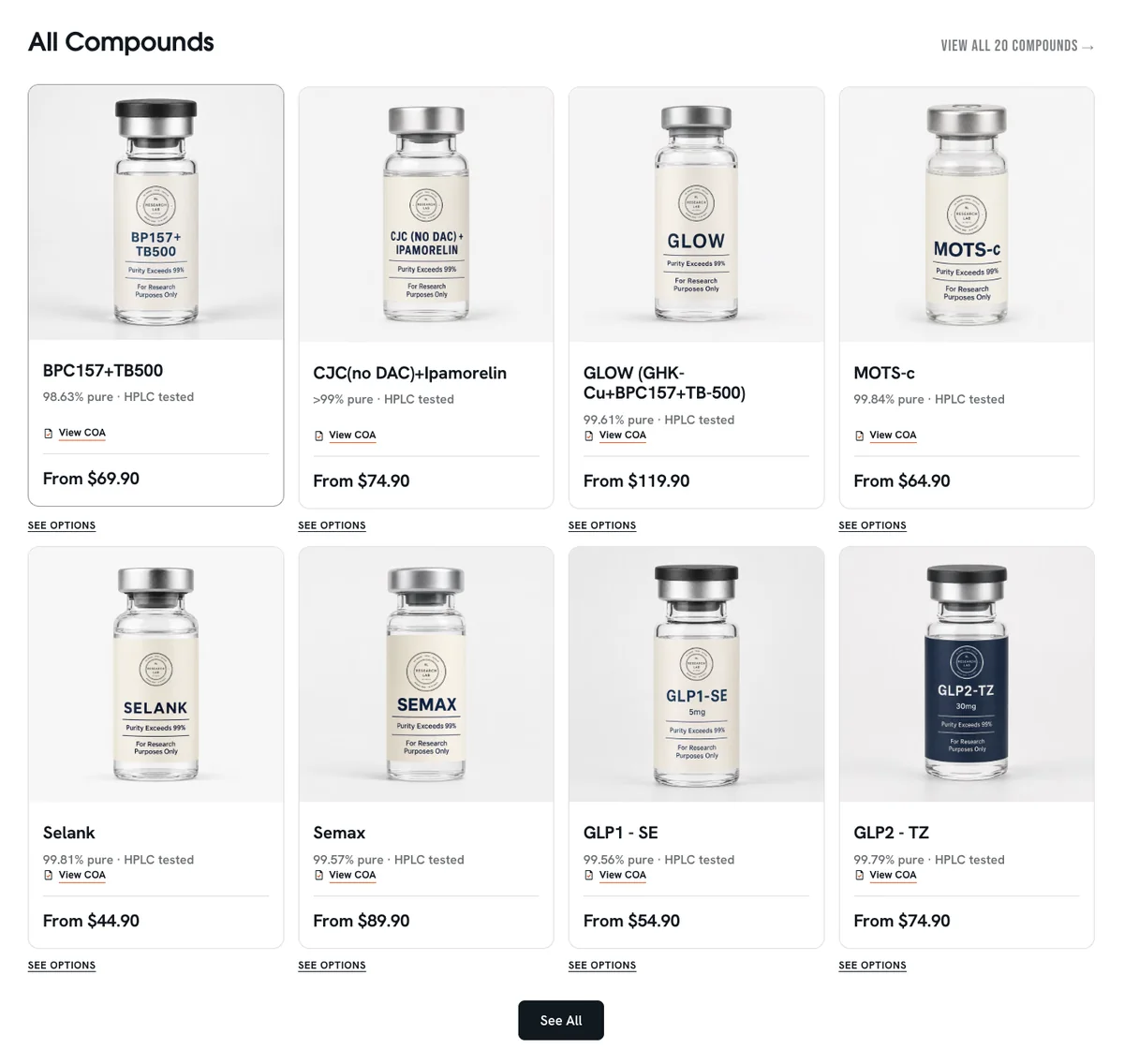 Open the full catalog →
Read the numbers first. Then decide.
Open any product, read the certificate for that batch, and check it against the vial when it lands. Volume pricing applies at 3+ and 6+ vials.
Browse the catalog →
Comments
Genuinely did not know purity and quantity were separate tests. Went back through three old certificates and not one of them listed content.
Same. I had been comparing suppliers on the purity number alone for about a year.
Checked four suppliers after reading this. Two had no content line at all, one sent a product level PDF, this was the only one where the batch number matched.
Ordered twice, four months apart. Both documents identical in format and both batch specific. That consistency is what kept me.
Shipping was domestic and tracked with gel packs, which was a first for me in this category.
The orange juice comparison finally made it click. A full glass and a pure glass are not the same claim.