Compound Quality · Documentation
Almost Every Supplier Shows You A Certificate. Very Few Of Them Match The Vial In The Box.
A batch certificate and a product certificate look identical. Same layout, same laboratory letterhead, same impressive percentage. One of them is evidence about your vial. The other is a brochure about a vial somebody else received.
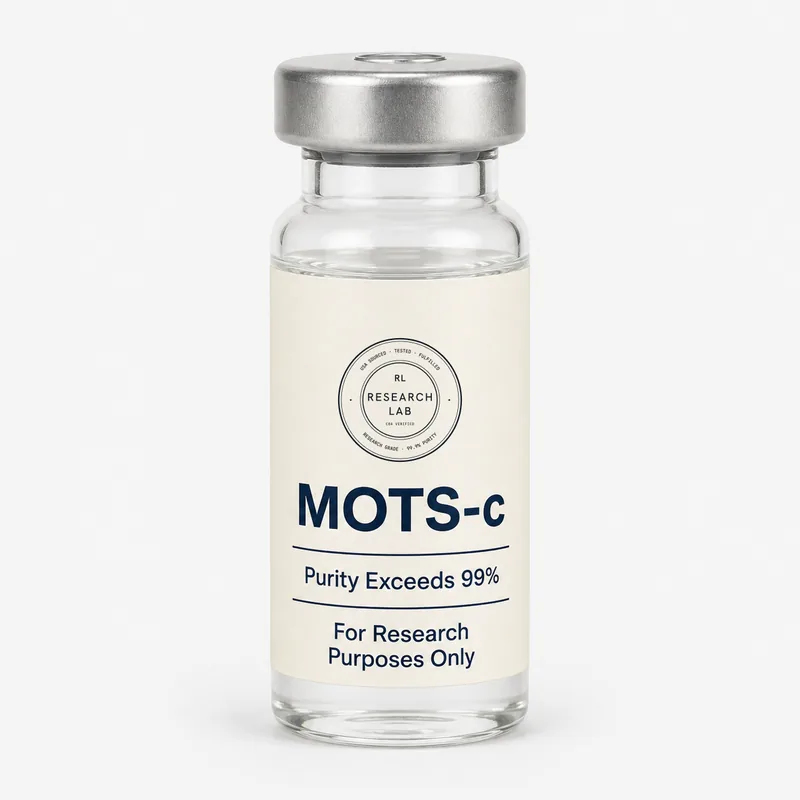 View the listing and its certificate →
Open two certificates side by side. Both name the compound. Both show a purity figure over 99%. Both carry a laboratory name at the bottom.
One difference separates them, and it is a single field.
A batch certificate carries a batch number, and that number is printed on the vial you were sent. The document describes the specific material in your hand.
A product certificate carries a product name, and nothing else tying it to anything. It describes a batch that existed at some point. Possibly last week. Possibly two years ago.
Without a batch number, a certificate is a document about a product category, not about your order.
GLP1 Research Lab links a batch specific certificate from every product page.
Identified by batch number, testing date, compound identity and purity percentage. Available before you order rather than after. Volume pricing applies at 3+ and 6+ vials.
Open the COA database →1The four fields that decide it
You do not need to understand chromatography to evaluate a certificate. You need to check four fields, and it takes under a minute.
- Batch number. Present, and matching the number on your vial.
- Testing date. Recent, and consistent with when that batch was made.
- Compound identity. Named on the document, not just in the filename.
- Laboratory name. An independent laboratory, not the seller's own bench.
If all four are there, you have evidence. If the first one is missing, the other three are describing something you cannot connect to your order. Their guide on how to read a Certificate of Analysis walks the same fields in order.
The batch number is the field that turns a document into evidence.
2Why one PDF gets reused
Testing every batch costs money every time. Testing one batch and hosting the resulting PDF costs money once.
A supplier doing the second thing is not necessarily selling poor material. They simply cannot tell you anything about the specific vial they sent you, because nobody looked at it. The document on the site is true and irrelevant at the same time.
A reused certificate is not a lie. It is an answer to a different question.
3Available before, not on request after
There is a meaningful difference between a certificate you can open while deciding and a certificate you are promised once you have paid.
The first is a claim made under scrutiny. The second arrives when the decision is already behind you. GLP1 Research Lab links the current certificate from the product page itself and runs a public COA database, which means the document is part of the listing rather than part of the aftercare.
Documentation that only appears after payment is not documentation you used.
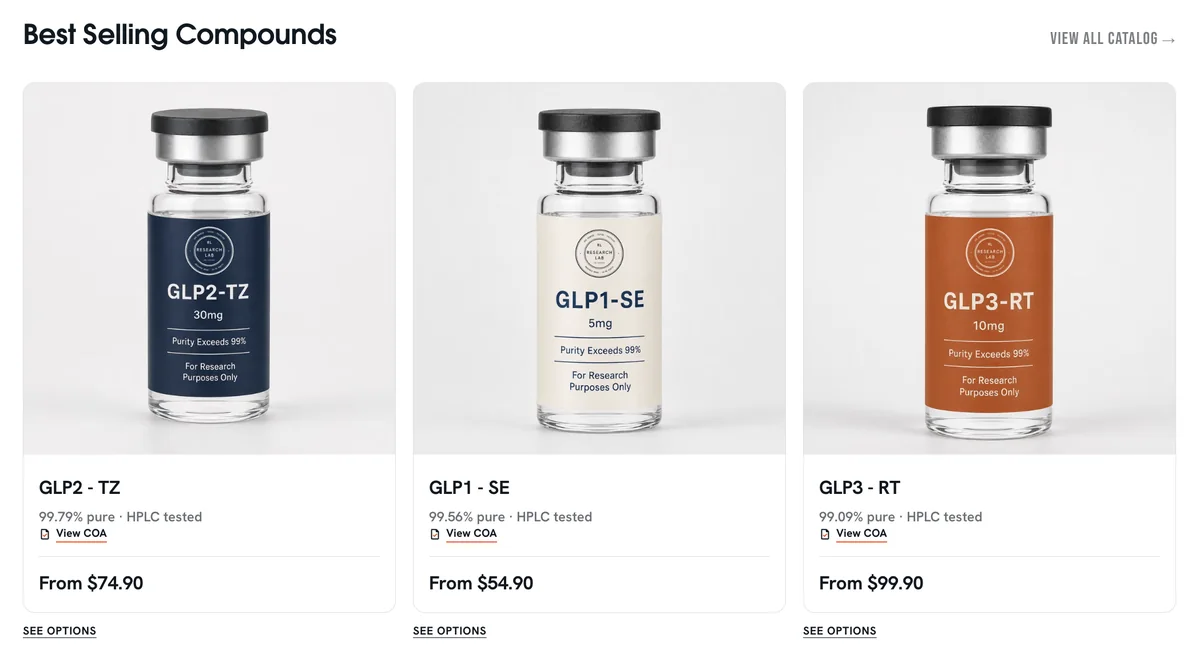 Open the full catalog →
4A searchable database is a harder commitment
Hosting one PDF per product is easy. Maintaining a database where any batch can be looked up is not, because it has to keep pace with production, and because it leaves a trail.
That is exactly why it is a useful signal. The cost of running it is the proof. A supplier who publishes every batch has removed the option of quietly not testing one, which is the point of their third party testing standard.
A public database is expensive to maintain and impossible to fake at scale.
Open the GLP1 Research Lab COA database and check these fields on a real document rather than taking this table's word for it.
Check the batch number before anything else.
One field decides whether a certificate is about your vial or about a photograph of one.
Open the COA database →5What to do when the vial arrives
- Read the batch number off the vial first. Before you open anything.
- Open the certificate again and compare the two numbers. Character by character.
- Check the testing date sits before the shipping date. Obvious, and worth ten seconds.
- Save the PDF. Documents move. Your copy does not. Every certificate is kept in the COA database.
- Repeat it on the next order. Consistency across two orders is worth more than any single document.
| On documentation | GLP1 Research Lab | Typical supplier |
|---|---|---|
| Certificate scope | Batch specific | Often product level |
| When you can read it | Before ordering | On request afterwards |
| Where it lives | Linked from every product page | Emailed on request |
| Batch lookup | Public COA database | None |
| Coverage | 100% of batches | Selected products |
| Who tested it | Accredited independent lab | Frequently in house |
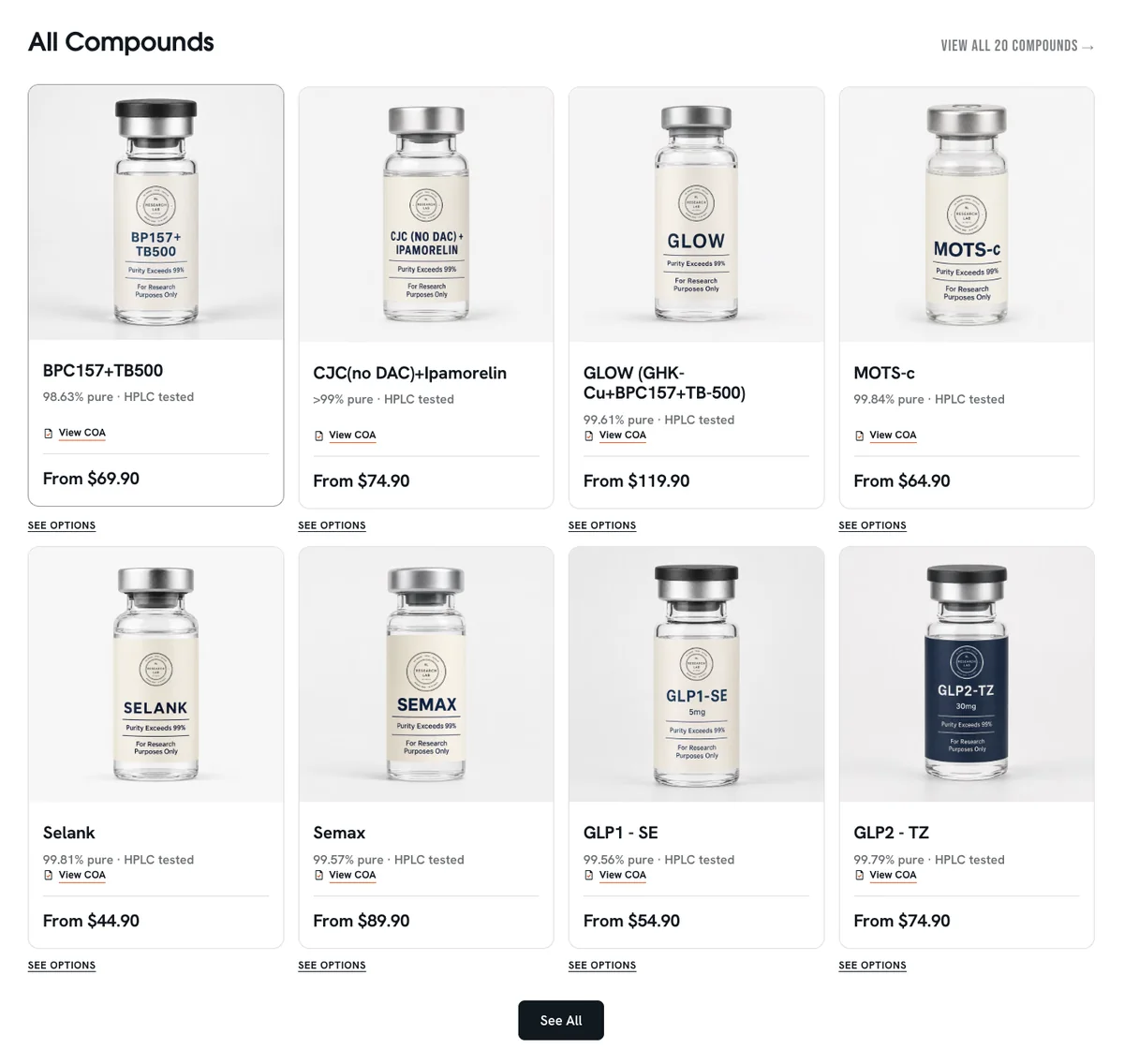 Open the full catalog →
One field. One minute. Every order.
Find the batch number, match it to the vial, and keep the document. Volume pricing applies at 3+ and 6+ vials.
Browse the catalog →
Comments
Pulled up the last certificate I was sent. No batch number anywhere on it. Never occurred to me to look.
Mine had a batch number but the testing date was from over a year ago. Same problem really.
A reused certificate is not a lie, it is an answer to a different question. Best sentence in this.
Being able to search the database before ordering rather than asking someone is the actual difference for me.
Agreed. Anything that needs an email first is a slow no.
Started saving the PDF with every order after reading this. Takes five seconds.